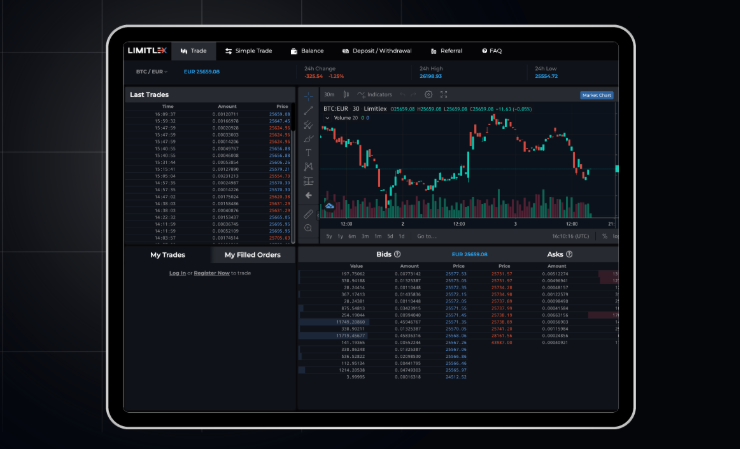

 Trade
Trade  Balance
  Deposit / Withdrawal
 Referral
The recent volatility seen in crypto markets inevitably draws comparisons to the harsh collapses of yesteryear. The sharp decline in prices and swift erosion of confidence seen in 2022 remains a benchmark for many investors and businesses. The emergence of similar market patterns in 2026 naturally sparks concern. Are we heading back into that familiar, painful cycle? While the price action may look similar on the surface, the context has undoubtedly changed. Businesses now have significantly greater command over their interaction with digital assets due to a much more developed infrastructure, particularly for crypto transactions, and the establishment of more robust risk management practices.
In this article, we’ll look at how 2026 compares to 2022, and why many analysts are approaching this cycle with far less concern.
Why does 2026 feel uncomfortably familiar?
The recent pullback in crypto markets has brought with it a clear sense of déjà vu. Current market sentiment distinctly echoes previous downturns, with their typical price corrections, widespread apprehension and corresponding media coverage. Specifically within the Bitcoin market, there’s a familiar pattern emerging of price surges invariably followed by sudden, often protracted, declines. This cyclical behavior is well-documented by those monitoring the cryptocurrency space.
Bitcoin's current volatility, though slightly unsettling, is not unprecedented. In the past, this now-major asset has experienced drawdowns in the range of 60 to 80%, which aren’t uncommon as part of its long-term growth pattern. By way of example, Bitcoin fell from its all-time high of around $69,000 in late 2021 to roughly $15,000–$16,000 by the end of 2022. When seen through this lens, the fluctuations Bitcoin has experienced in 2026 look less like a new crisis and more like a familiar phase of the same cycle.
What makes the 2022 crash different?
While the price action we’re seeing today may feel familiar, what happened in 2022 went well beyond a typical market cycle. It wasn’t just a case of prices drifting lower. A series of high-profile failures exposed some real weaknesses across the crypto ecosystem. The collapse of Terra/Luna wiped out tens of billions in value almost overnight, and the failure of major players such as FTX sent shockwaves through the industry and significantly damaged trust.
At the same time, many companies in the space were operating with high levels of leverage, limited risk controls and very little transparency. When market conditions tightened, those weaknesses became hard to ignore. The result was a kind of domino effect, where the failure of one player put pressure on others. So while macro factors played a role, 2022 was also a turning point that showed just how much of the industry still needed to mature.
Why are analysts less concerned in 2026?
So while the price movements may look similar, the underlying conditions in 2026 are not quite the same. The industry that exists today is, in many ways, a product of what it went through in 2022. There is a greater focus on transparency, stronger risk management practices and a clearer understanding of where vulnerabilities can surface. Many of the weaker players have already been weeded out, leaving a more resilient and robust set of businesses and service providers behind.
This change holds equal importance for investors and traders.Risk management is now more disciplined, reflecting a stronger awareness of how quickly conditions can change, and is defined by a reduced reliance on excessive leverage. Market participants are more familiar with Bitcoin’s cyclical nature, and sharp corrections are increasingly seen as part of that pattern rather than a breakdown of the system itself. As some analysts note, these kinds of pullbacks have occurred repeatedly within broader upward trends, reinforcing the idea that volatility is an inherent feature of the market, rather than a flaw.
For more insights and reflections on the crypto market, how to use Limitlex, or to open a trading account with us, visit www.limitlex.com.